The hidden genocide in Sudan: A humanitarian crisis
Sudan is facing a deepening humanitarian crisis marked by mass displacement, ethnic violence, and international silence.
Victoria A.Bigirimana ︳November 2025 ︳7 min
What is happening in sudan is no less than a genocide so why arent you hearing about it? To understand what is happening in Sudan we have to go back to 1955.
1955-2011
Sudans prolonged crisis of national unity
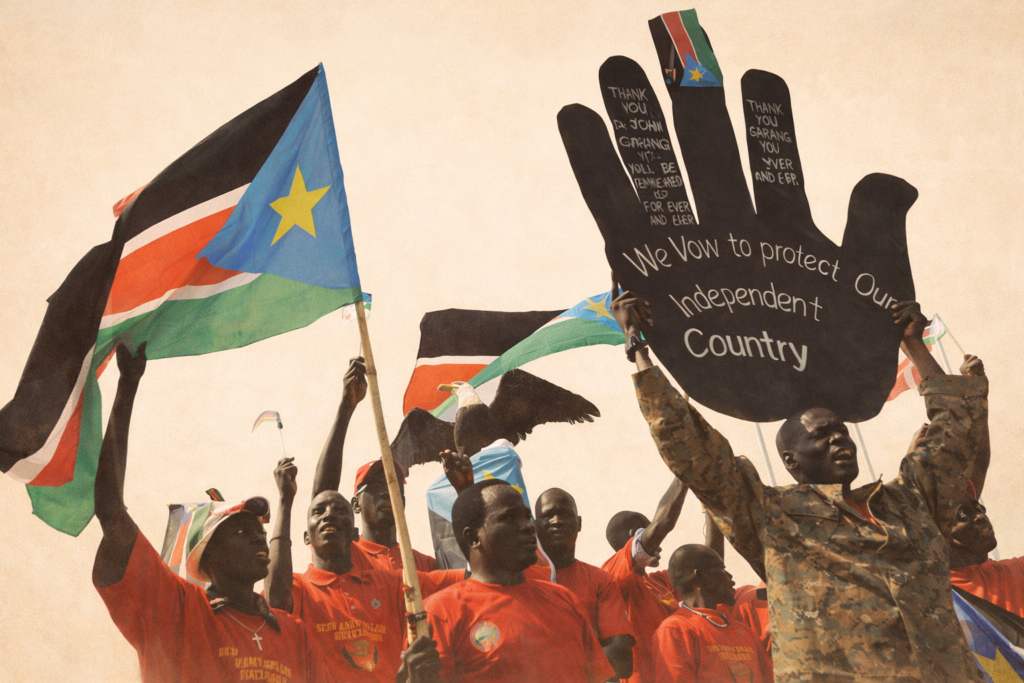
By the late 1970s, oil was discovered in southern and border regions (Shankleman, 2011). Fearing a loss of control, President Gaafar Nimeiry revoked southern autonomy in 1983 and imposed sharia law across the country (World Wide, 2023). This decision triggered the Second Sudanese Civil War (1983–2005) (Center for Preventive, 2025). The Sudan People’s Liberation Movement (SPLM), led by John Garang, launched an armed struggle, not just for southern independence, but for a “New Sudan” based on equality and democracy.
The war devastated the country, causing around two million deaths and massive displacement (Neuman, 2023). Internal ethnic divisions in the south further deepened the crisis. After years of stalemate and international mediation, the Comprehensive Peace Agreement (CPA) was signed in 2005 (UNMIS, n.d), restoring autonomy to the south and setting a referendum on independence.
This agreement ultimately led to the birth of South Sudan as an independent nation in 2011.
2003- late 2000s –
Start of darfur genocide
Darfur is a region in western Sudan that was not a part of north-south wars. Local non arab groups living here felt neglected by Khartoum, and in 2003 rebel groups attacked government forces The sudanese goverment armed Arab militias called the Janjaweed, which then carried out mass killings, burned villages, raped women, and displaced millons.
The UN and many governments ecclared this ethnic cleansing or genocide. 200,000 people died and 2 million were displaced.(Holocaust memorial museum,2025) The International criminal court issued arrest warrants against president Omar al-bashir for war crimes, crimes against humanity and genocide.
In 2011 as promised South Sudan gained independence and a referendum was held in January 2011 where nearly 99% of southern voters chose independence.(BBC,2011) On July 9,2011 South Sudan became the world’s newest country. This though did not fix all their problems as border regions like Abyei,South Kordofan,Blue Nile stayed in Sudan and still had rebel groups fighting for autonomy.
______________________________________________________________________________________________________________________________________________________
“The world has witnessed two years of ruthless conflict which has trapped millions of civilians in harrowing situations, subjecting them to violations and suffering with no end in sight.”
— Mohamed Chande Othman, Chair of the UN Fact-Finding Mission on Sudan (2025)
______________________________________________________________________________________________________________________________________________________
2025-
Ongoing Mass Violence in the Sudan–South Sudan Border Regions
In March 2025, reports emerged accusing the United Arab Emirates (UAE) of providing financial and logistical support to the Rapid Support Forces (RSF), effectively enabling and sustaining their campaign of violence in Sudan. The allegations, covered by international outlets including the BBC, have raised serious ethical questions about global complicity in the ongoing atrocities. Many human rights advocates have since urged travelers and businesses to reconsider economic engagement with the UAE, warning that tourism and trade may indirectly fund forces responsible for genocide. (BBC, 2025).
In 2025, the ongoing Battle of Kadugli, involving the Sudan People’s Liberation Movement–North (SPLM-N) and the Rapid Support Forces (RSF), has displaced tens of thousands of civilians. RSF attacks have deliberately targeted villages, killing unarmed residents and destroying homes. Many of the affected communities are non-Arab Black ethnic groups, such as the Nuba, who have historically been marginalized by Sudan’s central government. Because these groups often support the SPLM-N which fights for their political rights and local autonomy they are frequently singled out in attacks, making the violence not only a military conflict but also an ethnic-targeted campaign against historically vulnerable populations.
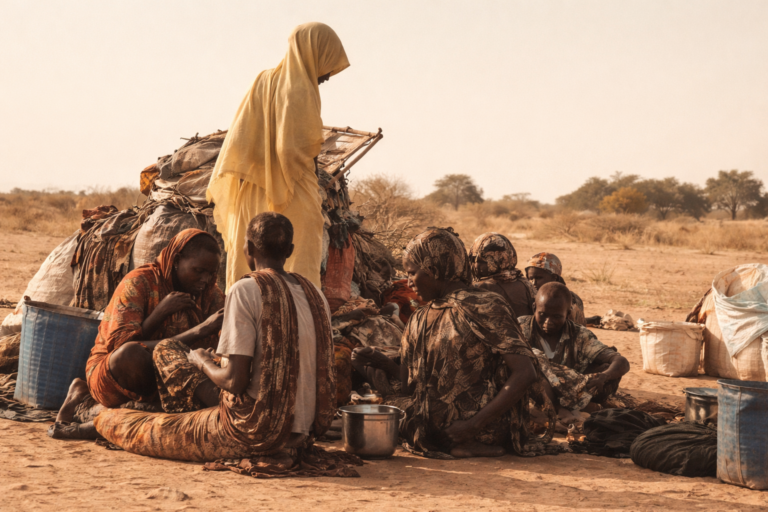
Since April 11, RSF-linked fighters have carried out coordinated attacks targeting Zamzam and Abu Shouk, the two largest camps for displaced people in Darfur, along with the regional capital, El Fasher. The violence claimed the lives of 23 children and nine aid workers who had been running one of the last health facilities in the area.(Mishra,2025)
On January 7, 2025, U.S. Secretary of State Antony Blinken declared that atrocities committed by the Rapid Support Forces (RSF) in Darfur amounted to genocide. This determination was based on systematic killings of men, boys, and even infants from targeted ethnic groups; widespread sexual violence against women and girls; and deliberate efforts to deprive civilians of access to food, water, and safety.
RSF fighters used racial slurs against the Masalit and other non-Arab groups, calling them “slave/umbay” or “black/nuba,” while declaring that Darfur belonged to Arabs and vowing to remove the Masalit.
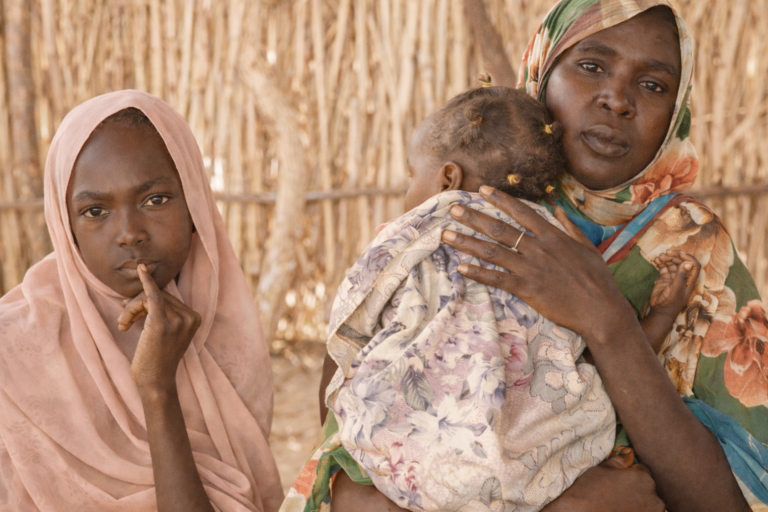
Reports detail that RSF forces detained and summarily executed Masalit men and boys, carried out mass rapes, burned victims alive, and destroyed homes, with roughly 800 civilians killed in just a few days.( holocaust memorial museum,2025 ) Masalit families fleeing to Chad were stopped at RSF checkpoints, where they were forced to reveal their ethnicity, pay bribes, and often faced detention, torture, sexual assault, or execution, while Arab families, including men and teenage boys, were able to pass unharmed.
The UN has documented ethnically motivated sexual violence against non-Arab women and girls, noting the use of racist slurs during assaults and evidence that rape is being used deliberately to intimidate and drive non-Arab groups from their homes.
Survivors report being called “slaves,” held in slave-like conditions, and even threatened with forced impregnation to alter ethnic identity, with one Masalit woman recounting how her attacker told her, “We will make you give birth to Arab children.”
At the same time, both the Sudanese Armed Forces (SAF) and the RSF have weaponized starvation, blocking food supplies, destroying infrastructure, and striking hospitals, contributing to the collapse of Sudan’s already fragile health system.
Late 2025 update -
El Fashar
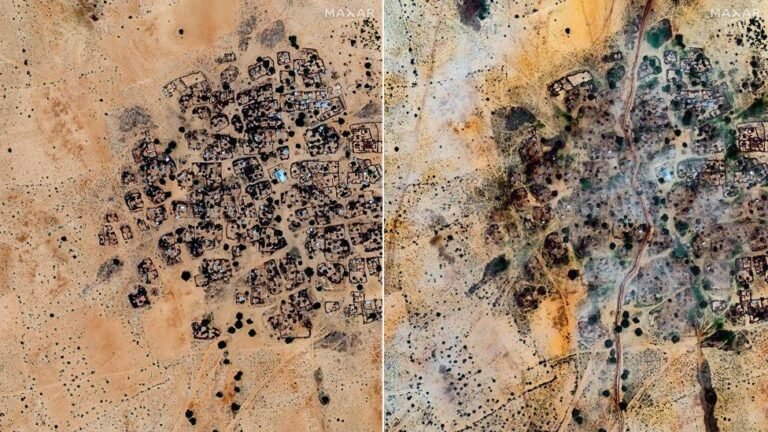
Recent satellite imagery and verified videos reveal widespread, systematic killings in El Fasher, Darfur, as the Rapid Support Forces (RSF) captured the city (ABC News, 2024). According to the Humanitarian Research Lab at Yale, clusters of objects consistent with human bodies appeared across residential neighborhoods, hospitals and city outskirts within just 72 hours of RSF’s advance (HRL Yale, 2024). Investigators observed discoloration around the bodies, RSF vehicles positioned nearby and evidence of house-to-house operations in areas where civilians were hiding (Raymond, 2024). Reports also indicate executions at facilities such as Saudi Hospital, where satellite images showed lines of detainees one day and unmoving piles the next (ABC News, 2024). As RSF seized Sudanese Armed Forces bases and encircled the city, civilians were left trapped with no way to flee (HRL Yale, 2024). Humanitarian experts warn that the organized, block-by-block pattern of killing,more systematic than previous RSF offensives, may signal a new phase of mass violence, which the U.S. has already described as part of an ongoing genocide in Darfur (U.S. State Department, 2024).
Seeing the People Behind the History
Sudan’s history shows how long-standing divisions, power struggles, and neglect can lead to devastating consequences for millions of people. Understanding these events is the first step toward empathy and awareness, after all, if it were you or your community facing this, you’d want people to understand and care. To see how much you’ve learned and test your knowledge about Sudan’s history and the current crisis, check out the quiz at the end of this post.

My name is Victoria Allison Bigirimana and this website and quiz were created as part of my MYP personal project. Using my prior knowledge of HTML, CSS, JavaScript, and TypeScript, I learned Angular to develop the quiz while also studying UX design and the humanitarian crisis in Sudan.I believe the lack of attention given to this issue is rooted in media biases and systematic rasicm. Through programming, I found a way to speak up about something I am passionate about, using technology to raise awareness and create meaningful impact.
bibliography:
ABC News (no date) Blood visible from space: Sudan shows evidence of Darfur genocide. Available at: https://abcnews.go.com/International/blood-visible-space-sudan-shows-evidence-darfur-genocide/story?id=126985544 (Accessed: [insert date]).
Angular.dev (no date) Dependency Injection. Available at: https://angular.dev/essentials/dependency-injection (Accessed: [insert date]).
BBC News (no date) [Article]. Available at: https://www.bbc.com/news/blog%20posts/cjel2nn22z9o (Accessed: [insert date]).
BBC News (no date) Sudan. Available at: https://www.bbc.com/news/world-africa-12317927 (Accessed: [insert date]).
Bootstrap (no date) GetBootstrap. Available at: https://getbootstrap.com (Accessed: [insert date]).
Concern Worldwide (no date) South Sudan: History timeline. Available at: https://www.concern.net/news/south-sudan-history-timeline (Accessed: [insert date]).
EBSCO (no date) First Sudanese Civil War erupts. Available at: https://www.ebsco.com/research-starters/history/first-sudanese-civil-war-erupts (Accessed: [insert date]).
EBSCO (no date) Sudanese Civil War resumes. Available at: https://www.ebsco.com/research-starters/history/sudanese-civil-war-resumes (Accessed: [insert date]).
Encyclopedia of the Holocaust (no date) Darfur. Available at: https://encyclopedia.ushmm.org/content/en/blog%20post/darfur (Accessed: [insert date]).
LSE Blogs (2012) British policy in Anglo-Egyptian Sudan…. Available at: https://blogs.lse.ac.uk/africaatlse/2012/07/02/british-policy-in-anglo-egyptian-sudan-bears-some-responsibility-for-the-deep-rooted-divisions-between-north-and-south/ (Accessed: [insert date]).
MIT Libraries (no date) Citing sources. Available at: https://libguides.mit.edu/citing#:~:text=To%20show%20your%20reader%20you… (Accessed: [insert date]).
O’Reilly (no date) Strategic Writing for UX. Available at: https://www.oreilly.com/library/view/strategic-writing-for/9781492049388/ (Accessed: [insert date]).
ReliefWeb (no date) History repeating itself in Darfur. Available at: https://reliefweb.int/report/sudan/history-repeating-itself-darfur-worst-possible-way-halting-genocide-sudan-policy-brief (Accessed: [insert date]).
SAPA-USA (no date) Sudan Civil War. Available at: https://sapa-usa.org/sudan-civil-war/ (Accessed: [insert date]).
Sudan — A Country Divided (no date) United States Holocaust Memorial Museum. Available at: https://www.ushmm.org/genocide-prevention/countries/sudan/a-country-divided (Accessed: [insert date]).
UNHCR (no date) Displacement crisis in Sudan deepens. Available at: https://www.unhcr.org/news/briefing-notes/displacement-crisis-sudan-deepens-fighting-spreads (Accessed: [insert date]).
UNMIS (no date) Comprehensive Peace Agreement. Available at: https://unmis.unmissions.org/comprehensive-peace-agreement (Accessed: [insert date]).
UN News (2025) [Article]. Available at: https://news.un.org/en/story/2025/04/1162211 (Accessed: [insert date]).
United States Institute of Peace (no date) Oil and State-Building in South Sudan. Available at: https://www.usip.org/sites/default/files/Oil_and_State_Building_South_Sudan.pdf (Accessed: [insert date]).
USHMM Vault (no date) Adaptive media file. Available at: https://vault.ushmm.org/adaptivemedia/rendition/id_e516f59d74a96cf058d0b03c7a988f119a492246 (Accessed: [insert date]).
UXPin (no date) Component-based design: A complete implementation guide. Available at: https://www.uxpin.com/studio/blog/component-based-design-complete-implementation-guide/ (Accessed: [insert date]).
Websites Over Coffee (no date) What is website engagement?. Available at: https://websitesovercoffee.com/what-is-website-engagement/ (Accessed: [insert date]).
World Britannica (no date) The Addis Ababa Agreement. Available at: https://www.britannica.com/place/Sudan/The-Addis-Ababa-Agreement (Accessed: [insert date]).